
Robotic Surgery for Cancer
What is Robotic Surgery for Cancer Treatment?
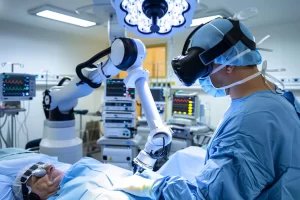
Robot-assisted cancer surgery is a new way of medical treatment that includes the latest robotic equipment which is utilized to conduct very complex surgical operations with utmost accuracy. This operation utilizes robot arms under the guidance of highly skilled surgeons, who utilize a high-definition monitor from a console. The robotic arms have endowments with specially designed instruments that can slice through the soft tissues of cancerous tumors more accurately than ever before, and this is of tremendous assistance in cancer surgery.
Types of Cancers Treated through Robotic Surgery
Robotic surgery has revolutionized the treatment of many cancers, such as prostate cancer, lung cancer, colorectal cancer, gynecologic cancers such as cervical and uterine cancer, head and neck cancers, and some liver and pancreatic cancers. Robotic technology’s flexibility allows surgeons to access and treat tumors in areas of the body that are difficult to reach, often with smaller incisions than in open surgery.
Benefits of Robotic Cancer Surgery
Robotic surgery for cancer has many advantages and is hence most patients and surgeons choose it as the first choice:
– Precision and Accuracy: Robotic arms are able to move unnoticeably with extremely high precision, injuring very little of the surrounding healthy tissue and organs. This is especially critical in cancer procedures when healthy tissue is to be kept safe at all costs.
– Minimally Invasive: Robotic surgery is typically minimally invasive with smaller incisions compared to open surgery. This is associated with reduced blood loss, shorter hospital stay, and faster recovery for the patient.
– Enhanced Visualization: Surgeons enjoy enhanced 3D visualization provided by robotic systems, with uninhibited observation of the operative site and better decision-making intraoperatively.
– Fewer Complications: Precision of robotic surgery leads to fewer post-surgical complications such as infections, blood clots, and pain, which lead to improved patient outcome.
– Early Return to Normal Life: Patients of robotic surgery recover early and return to normal day-to-day life and work routine, leading to an increased quality of life after surgery.
– Improved Oncological Outcomes: Robotic surgery has been shown by studies to have equal or even better oncological outcomes than conventional surgery, with improved long-term survival of cancer patients.
Conclusion
Overall, robotic surgery is a significant advance in cancer treatment, offering patients a combination of precision, less invasion, and improved outcomes. The accuracy and effectiveness of robotic systems to perform intricate surgical procedures are transforming cancer treatment, bringing hope and better opportunities to cancer patients suffering from various types of cancer. As technology continues to advance, robotic surgery in oncology will be able to expand its reach even more, enhancing treatment options and outcomes for cancer patients worldwide